
🌿 Where Is Wuyi Mountain?
The Wuyi Mountains are located in northern Fujian Province in southeastern China. The region sits between dramatic cliffs, winding rivers, dense forests, and narrow valleys that have supported tea cultivation for hundreds of years.
Unlike large commercial tea plantations, many Wuyi tea gardens are tucked into rocky mountain valleys where tea bushes grow among natural vegetation. The landscape creates an environment unlike almost any other tea-producing region.
In recognition of both its ecological importance and cultural history, Mount Wuyi was designated a UNESCO World Heritage Site in 1999. Today, it remains one of China’s most respected tea-growing regions.
🪨 The Secret Begins with the Rocks
When people first hear the name “Rock Tea,” they sometimes imagine tea growing directly from stone. While that’s not literally true, the surrounding rock formations play an essential role.
The Wuyi Mountains are famous for their ancient Danxia landforms, characterized by towering red sandstone cliffs formed over millions of years.
As these rocks slowly weather, they release minerals into the surrounding soil. Tea roots absorb nutrients from this mineral-rich environment while extending deep into the mountain terrain.
This unique geology contributes to the signature characteristics often found in Wuyi Rock Tea:
- smooth body
- layered complexity
- gentle mineral sweetness
- long-lasting finish
- balanced structure
Rather than producing a sharp or overwhelming flavor, the rocky environment helps create tea that feels elegant and refined.
☁️ Mist, Mountains, and a Gentle Climate
Climate is another key reason Wuyi tea develops its distinctive character.
The mountains are frequently covered in mist during the early morning and evening. These clouds naturally shade the tea plants, reducing direct sunlight and slowing leaf growth.
Slower growth allows tea leaves to accumulate more amino acids, aromatic compounds, and flavor precursors before harvest.
Several environmental factors work together:
- high humidity
- moderate temperatures
- frequent mountain fog
- abundant rainfall
- clean mountain air
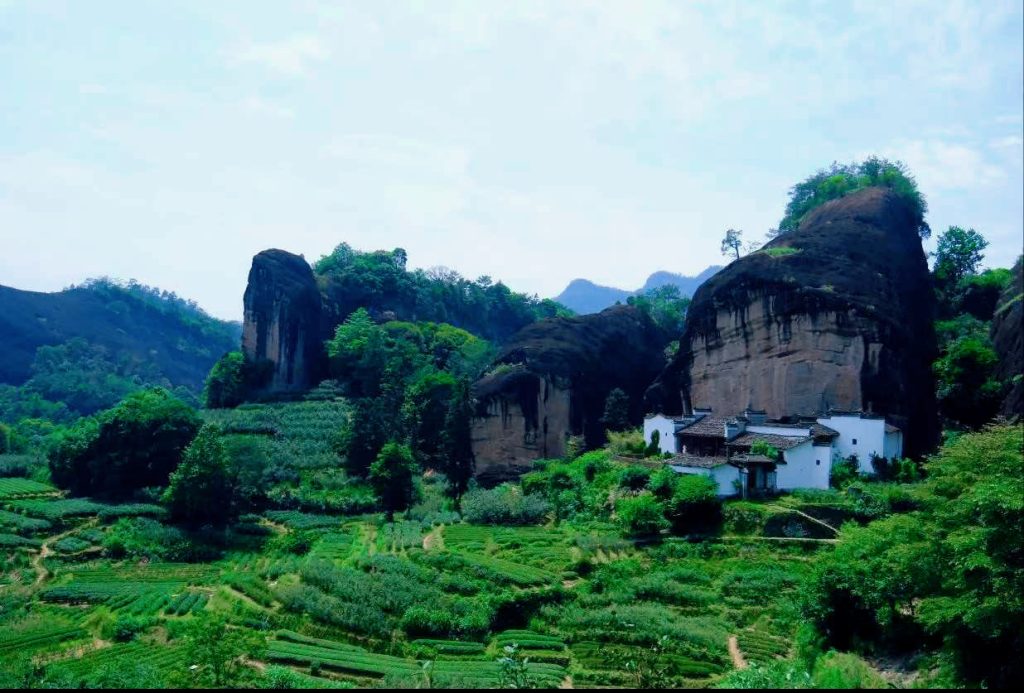
These conditions reduce environmental stress while encouraging the leaves to develop greater complexity.
Many experienced tea drinkers notice that Wuyi tea feels rich without becoming bitter, thanks in part to this balanced mountain climate.
🌱 Healthy Soil Creates Better Tea
People often focus on the tea leaves themselves, but great tea starts below the surface.
The soil in Wuyi Mountain is loose, well-drained, and rich in organic matter. Fallen leaves from surrounding forests naturally decompose over time, adding nutrients back into the earth.
Because many tea gardens are located on mountain slopes rather than flat farmland, water drains efficiently after rainfall while still providing adequate moisture for the roots.
Healthy soil encourages:
- stronger root systems
- slower leaf development
- improved nutrient absorption
- greater resilience during seasonal changes
The result is tea with richer flavor and greater balance.
🌳 Biodiversity Makes a Difference
Unlike intensive monoculture plantations, many Wuyi tea gardens exist within a much larger natural ecosystem.
Tea bushes often grow alongside native trees, bamboo, mosses, flowering plants, and various wildlife.
This biodiversity creates several advantages:
- healthier soil microorganisms
- better natural pest control
- improved ecological balance
- more stable growing conditions
A diverse ecosystem supports healthier tea plants without relying heavily on artificial intervention.
For many tea producers, protecting the surrounding environment is just as important as producing excellent tea.
🔥 Nature Starts the Flavor—Craftsmanship Completes It
Although Wuyi’s environment provides exceptional raw materials, the tea’s final character depends equally on traditional craftsmanship.
After harvesting, tea leaves go through multiple carefully controlled stages, including:
- withering
- shaking (to encourage partial oxidation)
- oxidation
- fixation
- rolling
- charcoal roasting
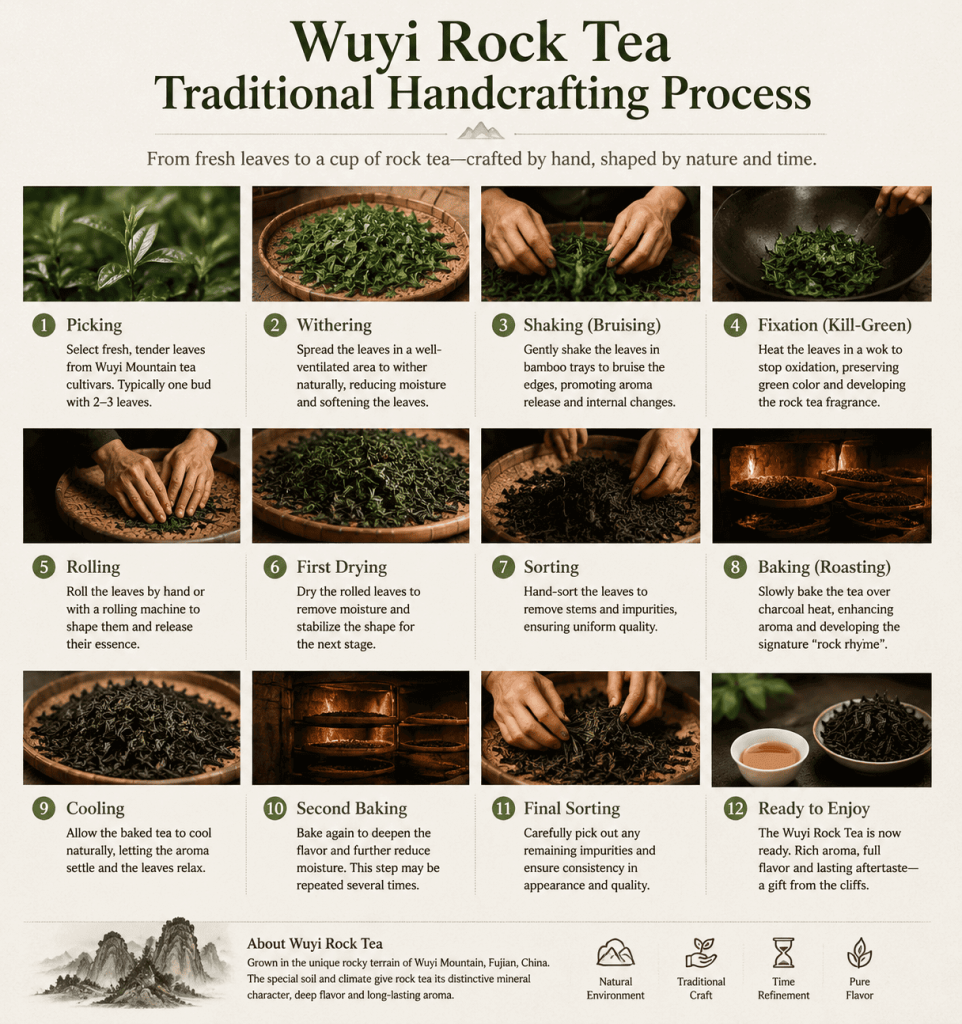
Charcoal roasting is particularly important for many Wuyi Rock Oolong teas.
Rather than masking the tea’s natural aroma, skilled roasting enhances sweetness, softens bitterness, and develops notes such as:
- roasted nuts
- cocoa
- dried fruit
- caramel
- warm wood
- orchid fragrance
Every roast requires careful judgment. Too little roasting leaves the tea underdeveloped, while excessive roasting can overpower its natural mountain character.
This balance between nature and craftsmanship is one reason authentic Wuyi tea is so highly respected.
🍃 Understanding “Yan Yun” (Rock Essence)
Perhaps the most famous concept associated with Wuyi tea is Yan Yun.
There is no perfect English translation because Yan Yun describes an overall sensory experience rather than one single flavor.
Tea drinkers often describe it as:
- lingering sweetness
- cooling sensation
- mineral freshness
- smooth mouthfeel
- deep aftertaste
- elegant complexity
Yan Yun isn’t created by one factor alone.
Instead, it emerges from the combination of:
- mountain geology
- rocky soil
- climate
- biodiversity
- traditional processing
- tea cultivar
This harmony is what makes Wuyi Rock Tea so memorable.
🍵 Why Every Harvest Tastes Slightly Different
One fascinating aspect of mountain tea is that no two harvests are exactly alike.
Rainfall, sunshine, seasonal temperatures, and even slight differences in roasting can influence the final cup.
Rather than seeking complete uniformity, many experienced tea drinkers appreciate these natural variations because they reflect the conditions of each growing season.
In this way, every harvest tells the story of that particular year in the mountains.
🌏 Why Wuyi Mountain Tea Is Loved Around the World
Today, Wuyi Rock Oolong Tea is enjoyed by tea enthusiasts across Asia, Europe, and North America.
Its appeal comes not from intense floral aromas or sweetness alone, but from its remarkable balance.
Many tea lovers appreciate its:
- layered aroma
- smooth texture
- long-lasting aftertaste
- ability to remain flavorful across multiple infusions
- connection to traditional Chinese tea culture
Whether brewed in a teapot or a gaiwan, Wuyi tea invites drinkers to slow down and notice how each infusion gradually reveals new aromas and flavors.
🍃 Explore the Taste of Wuyi Mountain
The remarkable flavor of Wuyi Rock Oolong Tea is not created by a single ingredient or processing technique. It is the result of an entire mountain ecosystem—rocky cliffs, mineral-rich soil, misty forests, clean water, and generations of skilled tea makers working together.
Understanding where the tea comes from makes every cup more meaningful. Behind its roasted aroma and lingering sweetness lies a landscape that has shaped Chinese tea culture for centuries.
If you’d like to experience these mountain flavors yourself, explore our collection of authentic Wuyi Rock Oolong Tea, carefully sourced from Fujian.
👉 Explore Our Wuyi Rock Oolong Tea Collection https://tealuz.com/product-category/oolong-tea/
If you’re new to brewing loose-leaf Chinese tea, you may also enjoy our guide:
👉 How to Brew Chinese Tea at Home: A Beginner Gongfu Tea Guide https://tealuz.com/how-to-brew-chinese-tea/
