
Introduction: What Makes Wuyi Rock Oolong Tea Special?
Among China’s most treasured teas, Wuyi Rock Oolong Tea stands out for its distinctive roasted aroma, rich flavor, and deep connection with the mountains where it grows.
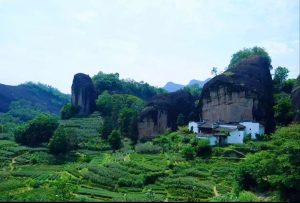
Unlike many teas that are mainly defined by their processing methods, Wuyi Rock Tea is strongly influenced by its natural environment. The rocky cliffs, misty valleys, and mineral-rich soil of the Wuyi Mountains give this tea its unique character.
Known as Yancha (岩茶) in Chinese, meaning “rock tea,” Wuyi Rock Oolong is not named after the taste of rocks. Instead, the name comes from the rocky landscape where the tea plants grow — a landscape that contributes to the tea’s famous “Yan Yun” (岩韵), or rock charm.
This special quality is often described as a deep mineral feeling, a smooth texture, and a long-lasting sweet aftertaste.
1. What Is Wuyi Rock Oolong Tea?
Wuyi Rock Oolong Tea is a type of traditional Chinese oolong tea produced in the Wuyi Mountains of Fujian Province, China.
Oolong tea sits between green tea and black tea in terms of oxidation. Through careful processing, tea makers create a balance between fresh floral notes and deeper roasted flavors.
The traditional production process includes:
- Careful leaf picking
- Sun withering
- Oxidation control
- Roasting
- Aging and refinement
The roasting process is especially important because it creates the warm, complex character that Wuyi Rock Tea is famous for.
Some of the most well-known Wuyi Rock Tea varieties include:
Da Hong Pao (大红袍)
One of China’s most famous teas, often considered the representative of Wuyi Rock Tea.
Rou Gui (肉桂)
Known for its unique cinnamon-like aroma and strong fragrance.
Shui Xian (水仙)
A classic Wuyi variety with smooth texture and woody, floral notes.
2. The Origin: Wuyi Mountains, Fujian, China
Wuyi Rock Oolong Tea comes from the Wuyi Mountains, a UNESCO World Heritage region located in northern Fujian Province, China.
The landscape of Wuyi is unlike ordinary tea-growing areas. The region features:
- Dramatic rocky cliffs
- Deep valleys
- Clear rivers
- Frequent mist and rainfall
- Mineral-rich soil
These natural conditions create a special growing environment known as the “rock tea environment.”

Tea plants growing among rocks and cliffs develop slowly, allowing them to accumulate complex flavors and aromas.
This is why Wuyi tea is often described as having:
- Depth
- Structure
- Mineral notes
- A long and elegant finish
The mountain environment is not just the background of Wuyi Rock Tea — it is part of the tea itself.
3. The Flavor Profile of Wuyi Rock Oolong Tea
One of the most fascinating aspects of Wuyi Rock Tea is its layered flavor.
Unlike lighter green teas that are usually fresh and grassy, Wuyi Rock Oolong offers a deeper and more complex experience.
Aroma
Depending on the variety and roasting level, you may notice:
- Roasted nuts
- Orchid flowers
- Caramel sweetness
- Cinnamon spice
- Warm woody notes
Taste
A well-made Wuyi Rock Tea often has:
- A smooth and full body
- Gentle roasted sweetness
- Balanced richness
- A clean finish
Aftertaste
Chinese tea drinkers often describe this quality as “Hui Gan” (回甘) — a returning sweetness that appears after swallowing.
For many tea lovers, this lingering sweetness is one of the most enjoyable parts of drinking Wuyi Rock Tea.
4. The Craftsmanship Behind Wuyi Rock Tea
Producing Wuyi Rock Oolong Tea requires patience and skill.
Traditional tea makers carefully control every stage of production, especially oxidation and roasting.
The roasting process gives the tea its signature personality.
A lighter roast may highlight:
- Floral aromas
- Freshness
- Sweetness
A deeper roast may create:
- Toasted flavors
- Rich body
- Warm and mature character
Experienced tea makers adjust roasting techniques according to the tea leaves, season, and desired style.
This craftsmanship is why authentic Wuyi Rock Tea is considered both a beverage and a cultural tradition.
5. How to Brew Wuyi Rock Oolong Tea
Wuyi Rock Tea is especially suitable for the traditional Gongfu Tea Brewing Method, which focuses on small amounts of tea, multiple short infusions, and careful appreciation of aroma and flavor.
Recommended Brewing Method:
Tea Amount
5–8 grams of tea
Water Temperature
95–100°C (203–212°F)
First Infusion
About 10–15 seconds
Number of Infusions
Usually 5–8 times or more
Each infusion reveals different layers of flavor.
The first cup may highlight aroma, while later cups often bring out sweetness, depth, and a smoother texture.
Brewing Tips:
Use hot water
High temperature helps release the roasted aroma and complex flavors of Wuyi Rock Tea.
Use a small teapot or gaiwan
A smaller brewing vessel allows better control of each infusion.
Take time to enjoy
Wuyi Rock Tea is not designed to be rushed. Its character develops gradually through each cup.
6. Wuyi Rock Tea: More Than a Drink
For centuries, Chinese tea has represented more than refreshment. It reflects a way of slowing down, appreciating nature, and creating moments of connection.
Wuyi Rock Oolong Tea carries the story of:
- Mountain landscapes
- Traditional craftsmanship
- Generations of tea makers
- Chinese tea culture
Each cup connects the drinker with the mountains of Wuyi and the traditions that have shaped this remarkable tea.
Experience Authentic Wuyi Rock Oolong Tea
If you are new to Chinese tea, Wuyi Rock Oolong Tea is a wonderful place to begin.
Its rich aroma, smooth texture, and unique mountain character make it one of the most fascinating teas in Chinese tea culture.
Explore our Wuyi Rock Oolong Tea collection and experience the flavors of the Wuyi Mountains in every cup.
Discover Wuyi Rock Oolong Tea →https://tealuz.com/product/wuyi-mountain-rougui-rock-tea/
